

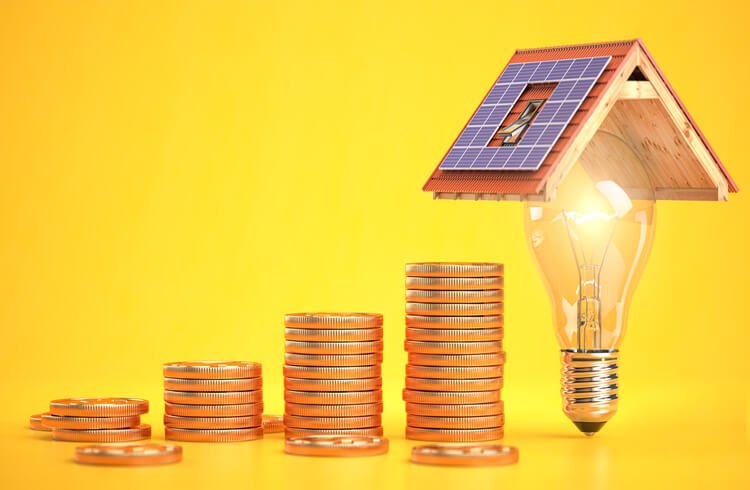
Amid rising electricity prices and persistent power supply issues in South Africa, there has been a surge in interest in alternative energy sources, particularly rooftop solar systems. Solar has emerged as an attractive proposition for homeowners and businesses, promising not just energy security but also the potential to contribute to the country’s power grid. However, the switch to solar energy comes with significant costs, creating a complex calculation for prospective users. Let’s delve into the costs and benefits of using solar energy vs traditional electricity in South Africa.
Solar Energy vs Traditional Electricity: Shifting Energy Landscapes
Eskom, the South African power utility, has grappled with numerous challenges, with the National Energy Regulator of South Africa (Nersa) recently permitting an 18.65% price hike starting from 1 April 2023. In response, President Cyril Ramaphosa announced plans for incentivising homeowners to install rooftop solar panels. This included a pricing structure enabling customers to sell surplus electricity back to the national grid. However, some residents are already ahead of the curve, with households importing over R2.2 billion worth of solar photovoltaic panels in the first five months of 2022 alone, according to Solana Energy.
The High Initial Costs: A Major Hurdle for Solar Adoption
Despite the allure of solar, the high initial costs remain a concern. Banking group Capitec estimates that going completely off-grid with solar could cost between R150,000 to R350,000. For many South Africans, these figures pose a substantial financial hurdle. But that doesn’t mean you have to take the leap all at once. There are several financing options available, making the transition to solar more feasible.
Running Costs and ROI
After installation, the costs of running a solar system are significantly lower than those of traditional electricity. Solar power systems convert sunlight directly into electricity, essentially providing free energy. Besides periodic maintenance and possible battery replacement costs, solar energy is almost cost-free post-installation. Conventional electricity sources, however, incur ongoing costs. Consumers are billed monthly based on their consumption rates, with prices varying widely based on locality and the provider’s fees.
Environmental Costs
The costs of using solar versus traditional electricity extend beyond financial implications. The environmental impact is also a crucial consideration. Solar energy is a clean, renewable source, producing no harmful emissions during operation and significantly reducing the carbon footprint.
Traditional electricity, however, often relies on fossil fuels such as coal and natural gas, which are not only finite but also contribute to greenhouse gas emissions and climate change. Although strides are being made towards cleaner electricity generation, as of 2021, fossil fuel power plants still accounted for a significant portion of global energy production.
Energy Independence and Security
Investing in solar energy can provide energy independence and security. Solar systems, especially those with battery storage, can offer a dependable power source during grid outages and remove reliance on external providers. On the other hand, traditional electricity consumers are subject to price fluctuations, potential power outages, and the policies of their utility companies.
Financing Options: A Ray of Sunshine
Grant Smee, the managing director of Only Realty Property Group, highlighted various financing methods to help bring solar within reach. These range from outright purchases to home loan providers offering the option to add the cost of solar installation to home loans. New market players also provide rent-to-own and fixed-monthly subscription services. For homeowners without home loans, banks such as Absa, FNB, Nedbank and Standard Bank offer loan options specifically for solar and backup systems. Additionally, companies like Hohm Energy are partnering with financial institutions to link homeowners to solar installers and financing options.
The Costs: Tailored Solar Solutions
The cost of a solar system is highly variable, depending on the type and scale. There are four primary options ranging from a basic load-shedding backup system (inverter and battery charged by the grid), grid-tied solar, hybrid systems, to a fully independent off-grid system. The more you want to disconnect from the grid, the more expensive the solution. For example, a household that spends R2,500 a month on electricity would need to spend over an estimated R190,000 to go completely off-grid.
Pricing estimates from Solana Energy put the cost of alternative energy between R60,000 for a system without panels to R290,000 for large-scale solutions. Consequently, the high cost of entry could mean residents end up paying more for the solar system than their typical monthly electricity bill.
The Solar Break-even Point
Despite the higher initial cost, homeowners and businesses should consider the long-term payoff. Most solar solutions start “paying back” only after three to eight years. After this break-even point, solar becomes a cost-effective option. Not to mention, residents will no longer be slaves to Eskom’s constant load-shedding, which is expected to continue for the next two years.
Rooftop solar in South Africa is not just an alternative energy source, it’s a way for residents and businesses to take control of their power needs amid escalating costs and unreliability from Eskom. While the initial costs are high, several financing options make it easier for South Africans to tap into this sustainable energy source. And in the long run, the benefits – financial and otherwise – of embracing solar energy far outweigh the costs. As the solar sector continues to evolve, South Africans will undoubtedly need to weigh their options carefully, but it’s clear that solar is not just a viable alternative, but a promising solution to the country’s power woes.
As solar technology advances and costs continue to drop, solar power will likely become an even more accessible and economical choice for many.
Ultimately, the decision between solar energy vs traditional electricity will depend on individual circumstances, including financial capacity, location, energy needs, and personal values. By understanding the costs associated with each option, you can make an informed decision that aligns with your goals and contributes to a more sustainable future.